


Armed Forces (Special Powers) Act, 1958
Syllabus: GS2/ Polity and Governance
Context
- Union Home Minister Amit Shah announced that the Armed Forces (Special Powers) Act (AFSPA) is likely to be withdrawn from almost the entire Northeast by 2027, except for one or two States.
What is AFSPA?
- The Armed Forces (Special Powers) Act, 1958 empowers the armed forces to operate in areas declared as “disturbed areas”.
- It grants special powers to security forces to maintain public order and combat insurgency.
- Major Provisions:
- The Governor of a State, the Administrator of a Union Territory, or the Central Government may declare an area as a “disturbed area”.
- Grants special powers to armed forces, including use of force (even causing death under specified conditions), arrest without warrant, search without warrant, and destruction of arms dumps or militant hideouts.
- No prosecution, suit, or legal proceeding can be initiated against armed forces personnel for actions taken under AFSPA without prior approval of the Central Government.
Major Committees on AFSPA
- Justice B.P. Jeevan Reddy Committee (2005): Recommended the repeal of AFSPA and incorporation of its essential provisions into the Unlawful Activities (Prevention) Act (UAPA), 1967, along with stronger grievance redressal and accountability mechanisms.
- Santosh Hegde Commission (2013): Found that the six encounter cases examined in Manipur were not genuine, highlighted misuse of AFSPA provisions, and recommended greater accountability and periodic review of the Act.
- Second Administrative Reforms Commission (2007): Recommended repeal of AFSPA, arguing that it had become a symbol of discrimination and alienation in affected regions.
Source: TH
SC Invokes Article 142 to Set Aside POCSO Conviction
Syllabus: GS2/ Polity and Governance
Context
- The Supreme Court invoked its extraordinary powers under Article 142 of the Constitution to set aside the conviction of a man under the Protection of Children from Sexual Offences Act, 2012 (POCSO Act).
Article 142 of Indian Constitution
- Article 142 of the Indian Constitution grants the Supreme Court extraordinary power to pass any decree or order necessary to do “complete justice” in any pending matter.
- It is designed to bridge statutory gaps and provide equitable relief where strict adherence to existing laws might lead to unfair outcomes.
What is the POCSO Act?
- The Protection of Children from Sexual Offences (POCSO) Act, 2012 was introduced by the Ministry of Women and Child Development to protect children from sexual abuse and exploitation.
- The Act criminalises both penetrative and non-penetrative sexual assault, sexual harassment, and child pornography, and applies to all children below 18 years of age.
- POCSO is a gender-neutral law and states that minors cannot give valid consent for sexual activity.
- It ensures child-friendly legal procedures, including special courts, private hearings (in-camera trials), and video-recorded testimonies.
- The Act also punishes those involved in child trafficking for sexual purposes and allows strict penalties based on the seriousness of the crime.
Source: TH
Shigellosis Outbreak in Kerala
Syllabus: GS2/ Health
Context
- Kerala has reported 85 confirmed cases and over 70 probable cases of shigellosis (bacillary dysentery) till June 2026.
What is Shigellosis?
- Shigellosis is a highly contagious bacterial infection caused by bacteria of the genus Shigella.
- It primarily affects the intestines and causes bacillary dysentery, characterized by severe diarrhoea.
- Symptoms: Fever, diarrhoea (often with blood or mucus), vomiting and nausea, abdominal cramps etc.
- Transmission: Consumption of contaminated food and water, person-to-person contact through the fecal-oral route.
Source: TH
HIMARS
Syllabus: GS3/Defence
Context
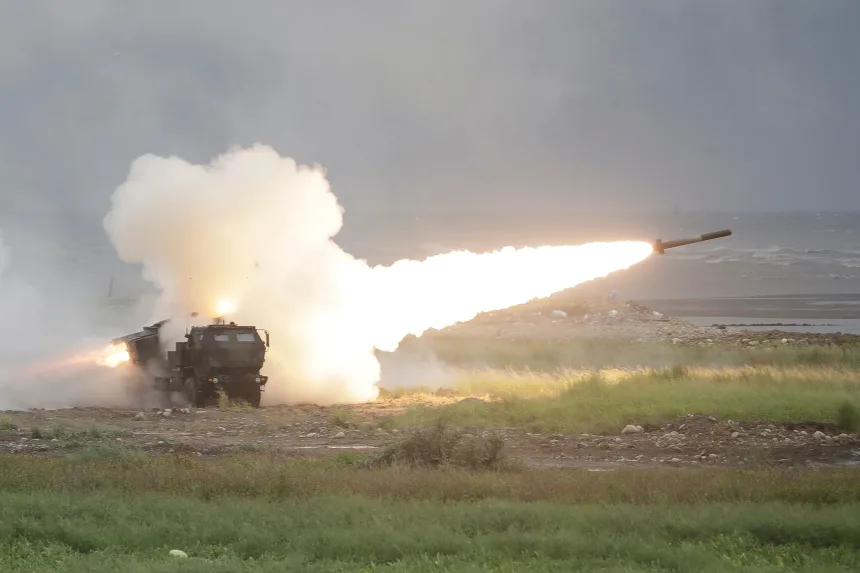
- Taiwan recently conducted its first-ever live-fire exercise using the High Mobility Artillery Rocket System (HIMARS) in the Taiwan Strait, simulating a defence scenario against a potential Chinese military threat.
About HIMARS
- It is a US-supplied mobile rocket artillery system manufactured by Lockheed Martin.
- It is mounted on a six-wheeled truck, enabling rapid movement across roads and rough terrain.
- The system is known for its “shoot-and-scoot” capability, allowing it to fire rockets and quickly relocate to avoid enemy counterattacks.
- With a range of around 300 km, HIMARS can strike targets across the Taiwan Strait, including coastal areas in China’s Fujian Province.
Do you know?
- HIMARS has been extensively used by Ukraine during its conflict with Russia and has emerged as one of its key long-range strike systems.
Source: CNN
Epichlorohydrin
Syllabus: GS3/Science
Context
- India has banned the use of epichlorohydrin, a paper-strengthening chemical classified as a potential carcinogen, and chlorine bleaching in tea bags sold in the country.
About Epichlorohydrin
- Epichlorohydrin is a chemical commonly used in paper manufacturing to improve the strength and durability of paper products.
- It has been used in the production of tea bag paper to prevent tearing during brewing.
- The International Agency for Research on Cancer (IARC) classifies epichlorohydrin as probably carcinogenic to humans.
- Concerns have been raised that residues of the chemical may migrate into beverages when tea bags are immersed in hot water.
- The ban aims to reduce potential health risks associated with prolonged exposure to hazardous chemicals in food-contact materials.
Source: Mint
Previous article
India’s Textile Industry Weaves a New Growth Story
Next article
FCRA: Expanding State Control Over Civil Society
